

Watch a quick guide to navigating this site
Watch a quick guide to navigating this site
Many of our ancestors recorded their day-to-day lives in diaries, journals, and calendars. Learn how to extract all the wonderful genealogical and historical information contained these sources and how to physically preserve them for the next generation.
Melissa Barker is a Certified Archives Manager and Public Historian currently working at the Houston County, Tennessee Archives. She lectures, teaches, and writes about the genealogy research process, researching in archives and records preservation. She conducts virtual webinar presentations across the United States for genealogical and historical societies. She writes a popular blog entitled A Genealogist in the Archives and is a well–known published genealogy Book Reviewer. She is a Professional Genealogist with an expertise in Tennessee records. She has been researching her own family history for the past 32 years.
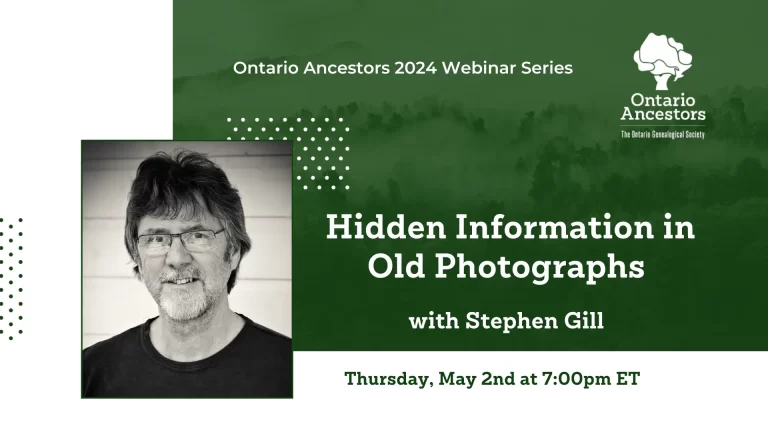
The talk follows a timeline of photographic history and how it can relate to your own research. We look at examples where looking at details can help put a photo into a time, place or context. Audience: all levels https://vimeo.com/944275957/5f1210d0ab?share=copy The video can be viewed in fullscreen by clicking on the expand icon (four diagonal…
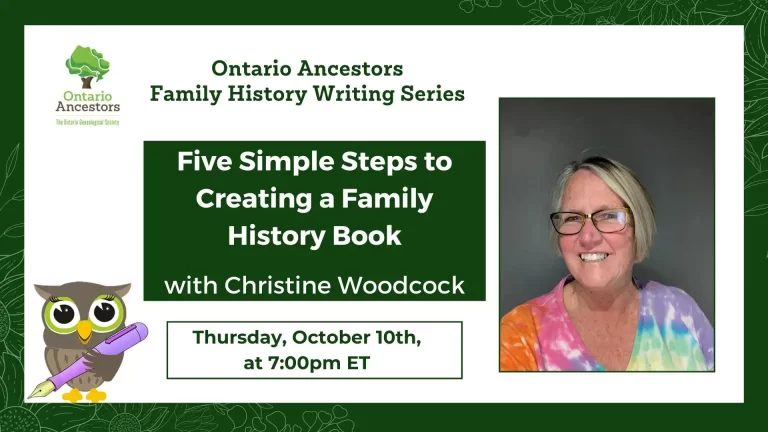
We have years of research sitting in files, boxes, envelopes. Accumulating this information has helped us to better understand the lives of our ancestors but it won’t make much sense to the next generation. It is important to get the information we know into a book so that our legacy can be preserved, our ancestors can…
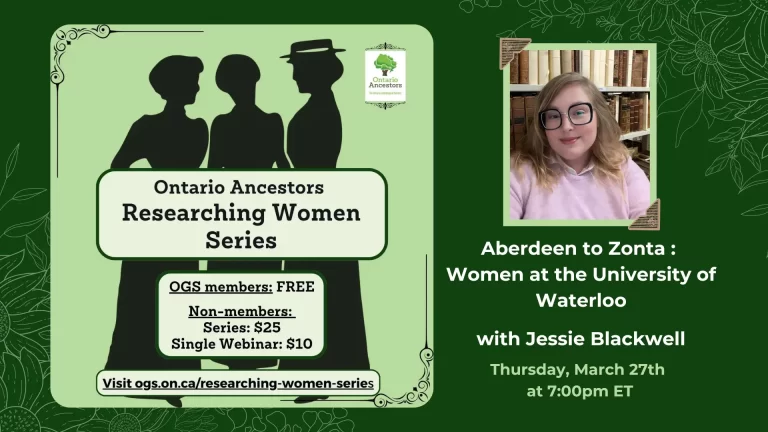
An overview of the women’s history collections at the University of Waterloo’s Special Collections & Archives. Particular emphasis will be placed on collections of Ontarian women and on those that relate to our core collecting areas such as reproductive rights. https://vimeo.com/1071695576/e25330bc5b?share=copy The video can be viewed in fullscreen by clicking on the expand icon (four…

I got into this by trying to identify the people named on the cenotaph in my town (Georgetown). An introduction to the frustration of variant spellings, and of who’s included or not. I liked the challenge of finding out about the fleeting lives of some of these men-often boys-like the one who had to use…
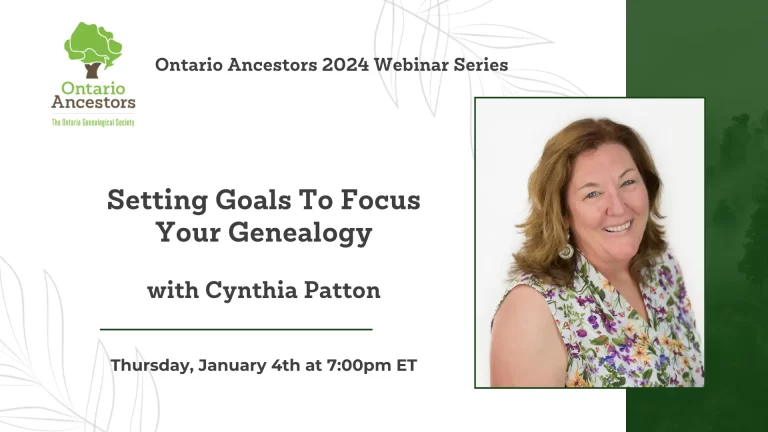
Everyone has ideas for their genealogy projects: write a family history; join a lineage society; or scan boxes of family photos. How do you decide which to do? How do know how much time each project takes? Goal setting, time estimation, and backwards planning can help you regain control of your time and help you…
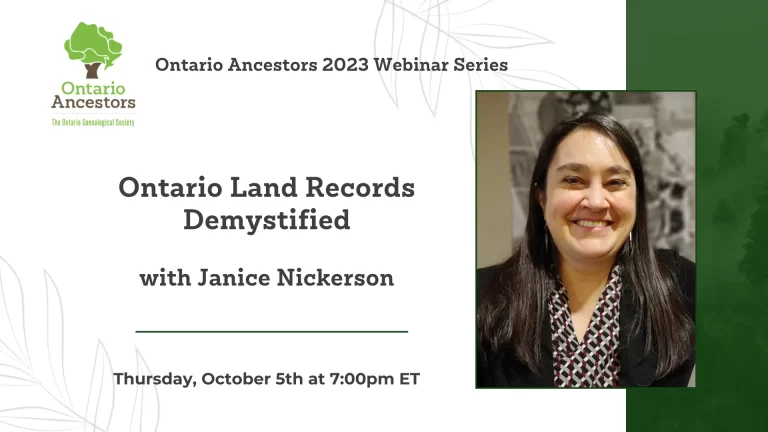
Land records are arguably the most important records for family historians researching their 19th-century ancestors because ownership of land was our ancestors’ most important achievement. The majority of immigrants to Upper Canada and Canada West did not have the opportunity to own land in their home country. This was one of the most important reasons…
"*" indicates required fields